Two things that keep appearing, and what that is worth
Read enough correspondence on one subject and you start noticing furniture. Not arguments, not claims — furniture. The same objects turning up in the background of otherwise unrelated letters, mentioned in passing by people who have never met and are not describing the same evening at all.
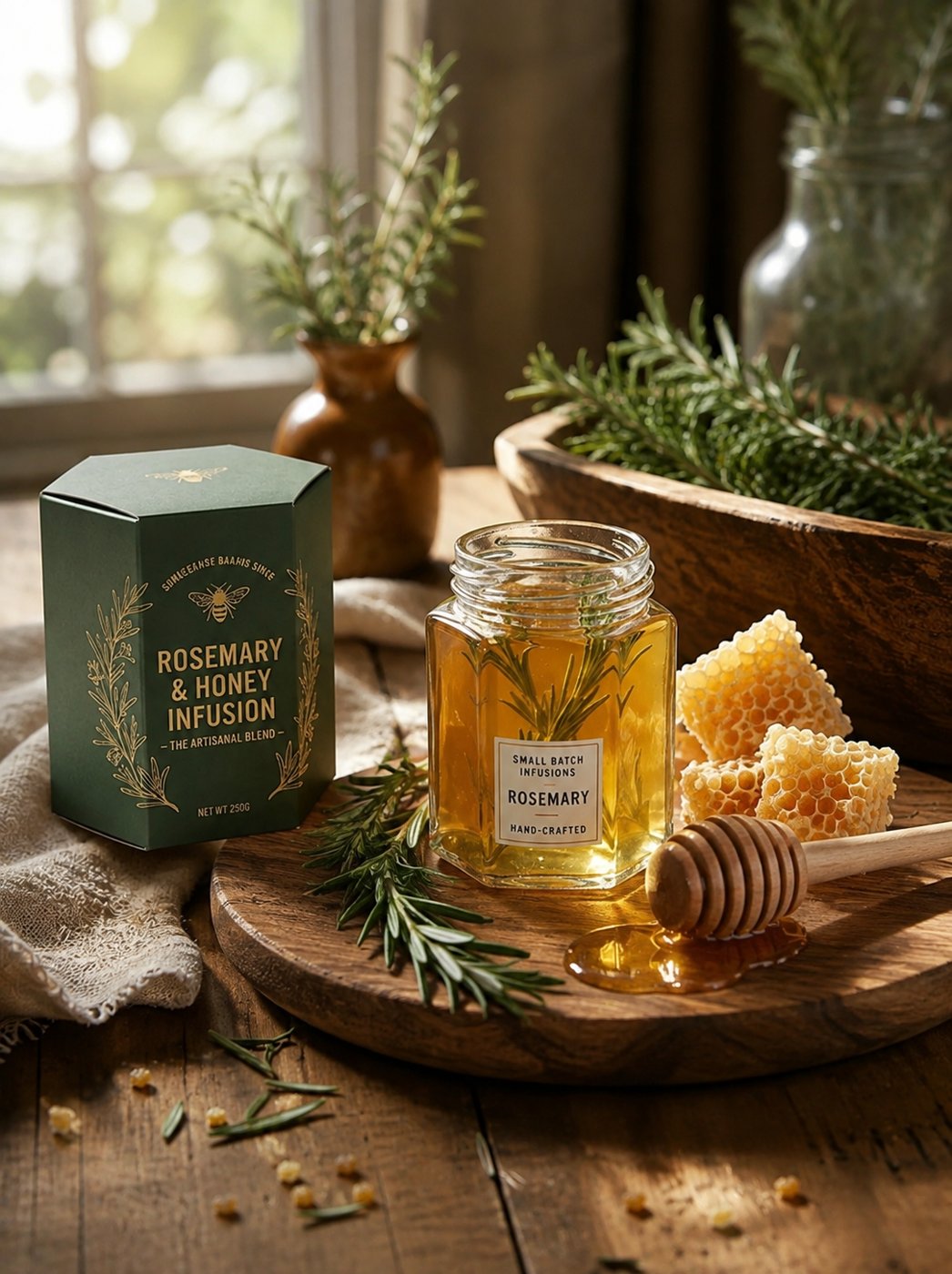
In letters about the end of the day from readers over 50, two of those keep coming round: a jar of honey and a sprig of rosemary. Neither is ever the point of the letter. They appear the way a kettle appears, or a particular chair, or the lamp somebody prefers to the ceiling light. Somebody is describing what their evening looks like, and those happen to be in the frame.
It would be easy, and wrong, to make more of that than it is. Two things showing up often in descriptions of a room tells you what tends to be in the room. It says nothing whatsoever about what they do, and this editorial does not suggest that they do anything. What is worth a second look is the routine that gets described around them, because that part is remarkably consistent from letter to letter.
What two ordinary pantry items have in common in these letters
Both are already in the house, both cost nothing extra, and both get mentioned as scenery rather than as anything anyone went out to acquire.
What editorial notes suggest about the last hour of a long day
Why the hour that gets described in most detail is almost never the hour anybody plans, and what a few readers did with that observation.
Why a few readers keep a note of which evenings went differently
Not as a record of anything measurable — several are explicit about that — but because the pattern only appears in hindsight.
The shape of the routine, in the order readers describe it
Three steps, always in the same sequence, and consistently described as being too small to talk about.
The order is the only part readers are precise about. Everything else varies from letter to letter.
The counter gets cleared, and the tray gets set out
Before anything else, and while the kitchen is still the kitchen. Readers describe this as the step that signals the day is closing rather than merely running out.
The overhead light goes off and the lamps come on
A small thing that several readers mention unprompted. The room changes and, they say, so does the sense of what is left to be done in it.
Everything is left where it will be found tomorrow
The jar back on the shelf, the sprig in its glass, the board where it lives. Nothing is put away properly, which is apparently the entire point.
Before trying anything at homeIf you have reduced sensation in your feet, check water and surface temperature by hand or thermometer before contact, and speak with a qualified healthcare professional before starting any at-home routine. Nothing described on this page involves heat, water, pressure or anything applied to the skin.
For centuries, honey was not only food — it was a way of paying for things
Medieval English manor rolls list it among the renders owed by tenants, alongside eggs and hens. Russian and Polish records set tribute in it. Byzantine and Ottoman tax registers counted hives. In parts of the Balkans and the Caucasus it turned up in dowry inventories, and in more than one place a fine could be settled in jars.
What that record is, in the end, is an accountancy of the ordinary. Things become currency when everybody already has them and everybody already wants them. The reason honey appears in so many ledgers is the same reason it appears in so many kitchens: it was simply always around, which is a very different kind of fact from the ones people usually reach for.
Cultural and historical context only
The rest of the editorial is in the presentation
A few minutes long, working through the four points above in the order readers tend to raise them.
Watch the short presentationEducational content Not medical adviceReader descriptions in this editorial are composite and illustrative. They collect recurring themes from correspondence, belong to no individual and are not offered as evidence of anything. Nothing on this page is a recommendation, and no outcome of any kind is stated, implied or suggested.